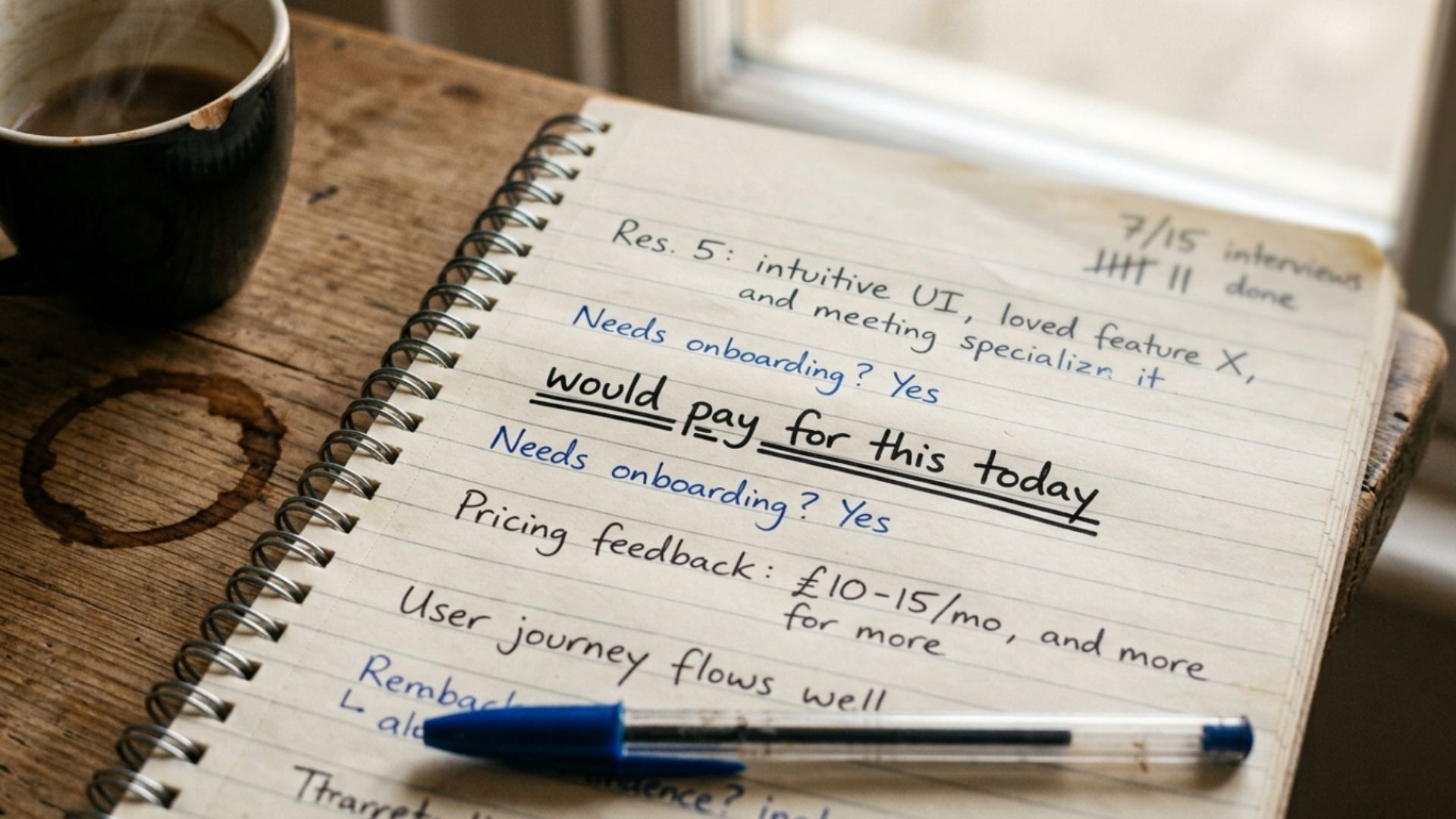
Months of building, then a launch that gets met with silence. Nobody signs up, nobody replies, and all that's left is a long list of features nobody asked for. It's one of the most expensive mistakes a founder can make, and it's almost always avoidable. Learning how to validate a business idea before writing a single line of code is what separates a wasted quarter from a real head start.
How to validate a business idea comes down to one thing: getting real evidence that people want it before you spend months building it. Let's be honest: validating an idea isn't homework to make you feel like a real founder; it's how you save six months of building something nobody wants. Inside, we cover budget-friendly stage-one methods, how to read signals without lying to yourself, and when to stop testing and finally write actual code.
What Validation Really Means
Business idea validation means collecting real evidence of demand, not a polite "sounds great" from a friend who was never going to be honest with you anyway. That distinction matters more than almost anything else in this whole process.
Validation differs from confirmation seeking, which happens when a founder listens only for the answers they already want to hear. Ask someone "would you use this?" and most people say yes out of kindness. Ask them what they actually did last time they faced this problem, and you get something closer to the truth.
The goal is to reduce risk before spending real time and money. Every conversation, every test, every small experiment is meant to lower the odds you're about to build something nobody needs. How to validate a business idea properly starts from that mindset, treating each signal as a way to de-risk the next decision, not as a formality to check off before building the thing you already wanted to build anyway. Solid business idea validation treats every conversation as data, not reassurance.
The best evidence is behavior, not opinion. Someone saying they'd pay is weak. Someone actually putting down a card number, even for a small deposit, is strong. The methods below are all built around that distinction.
Cheap Ways to Validate Before Building
Working out how to validate a business idea without a big budget comes down to a handful of low-cost startup validation tactics that cover most of what's needed at this stage. These tactics form the core of any real startup validation process, regardless of industry or product type.
- Customer interviews. Structured conversations focused on real past behavior, not hypothetical future intent.
- Landing page tests. A simple page describing the offer, with a signup or waitlist button, runs alongside a small ad budget to see who actually clicks through.
- Pre-sales. Asking for real payment, even a deposit, before the product exists at all.
- Waitlists. A lower bar than pre-sales, but still a real commitment of someone's email and attention.
At this stage, a proof of concept isn't about proving the technology works; it's about proving demand exists. That's a different question than most founders think they're answering when they build an early prototype. Testing technical feasibility matters eventually, but at the idea stage, a proof of concept should first test whether anyone actually wants the outcome.
A fake-door test, sometimes called a pretotype, is a simple way to measure real interest without building anything functional, a lighter version of a proof of concept that skips the engineering work entirely. Put up a button that says "Start Free Trial," and when someone clicks it, show a message explaining the product isn't ready yet, then ask for their email. The click rate tells you something real about interest, cheaply, before a single line of production code exists.
The rule worth repeating through all of this: chase evidence of people acting, not just saying. Words are cheap. A signup, a deposit, a shared calendar invite for a real conversation - those cost the other person something, and that's exactly why they're worth trusting.
Reading the Signals: Real Demand vs Politeness
The build-measure-learn loop, borrowed from lean startup thinking, applies well even before anything's built. Build a small test, even something as simple as a landing page. Measure what actually happens: clicks, signups, replies. Learn from the gap between what you expected and what actually occurred, then adjust the next test accordingly. Repeating this build-measure-learn cycle a few times, even at the idea stage, sharpens the signal much faster than one big test ever could.
Telling a strong signal from a weak one takes some practice. A strong signal looks like someone paying, committing real time to a call, or actively following up without being prompted. A weak signal looks like a compliment, a "this is such a great idea," or a like on a social post. Compliments cost nothing to give and mean almost nothing about whether someone would actually buy.
Confirmation bias sneaks in through leading questions more often than founders realize. "Wouldn't it be great if there was a tool that did X?" is a leading question built to manufacture a yes. "Tell me about the last time you tried to solve this problem" is a neutral question built to surface what actually happened.
A rough threshold worth using: if fewer than 1 in 5 people you talk to show a real, costly signal of interest, the idea likely needs rethinking before moving forward. If more than half do, that's usually strong enough evidence to justify building something small. This is really the core of how to validate a business idea at any stage: watching for the ratio between real commitment and polite interest.
How Many People to Talk To (and What to Ask)
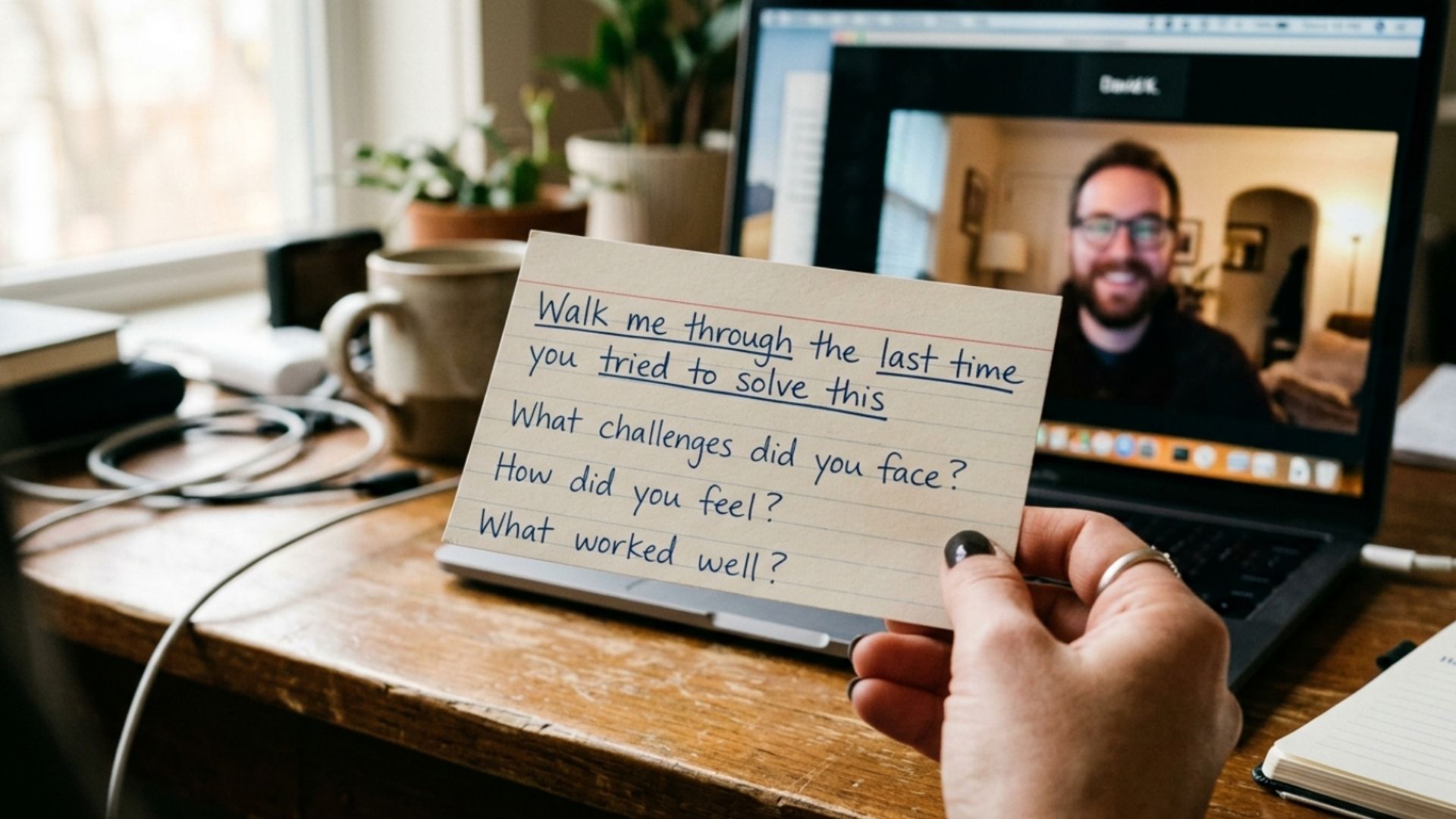
A practical target before you validate startup idea decisions is somewhere around 10 to 15 real conversations. Fewer than that and you risk building a whole strategy around one unusually enthusiastic person. More than that, without seeing a clear pattern, usually means the questions need sharpening, not that more volume will magically produce clarity.
Past-tense questions reveal real behavior far better than future-tense ones. "How did you deal with this the last time it came up?" beats "would you use a tool for this?" every time, because the first one is anchored to something that actually happened.
How to test a business idea with more than just interest means asking for a small paid commitment somewhere in the process. Even ten dollars for early access filters out people who were just being polite from people who genuinely want the outcome badly enough to act.
Once conversations are done, group the findings into a clear go/no-go signal. Did the same specific pain come up across most conversations? Did real commitment show up: payment, a waitlist signup, a booked follow-up call? If both are true, that's a green light. If neither is, that's useful information too, just not the kind anyone enjoys hearing.
When to Stop Validating and Start Building
There's a real trap on the other side of this too: endless validation that never actually leads anywhere, sometimes called analysis paralysis. Some founders use "more business idea validation" as a comfortable way to avoid the much scarier step of actually building and shipping something.
A few signals suggest it's time to stop testing and start building. A consistent pattern has shown up across enough conversations. Some people have already committed real money or real time. And the next test you'd want to run genuinely requires a working product.
Validation feeds directly into what gets built first. The specific pain people described, and the specific moment they struggled with it, point straight to the smallest version of a product that could address it. That's a different exercise from validation itself, but it starts from exactly the evidence validation produced.
Once demand is real, the next question becomes what minimum thing to build first, which is its own separate conversation. Knowing how to validate a business idea is only half the work. Knowing when to stop and build is the other half.
Frequently Asked Questions
How do you validate a business idea? Get real evidence of demand before building anything. That means running customer interviews focused on past behavior, testing a landing page for real signups, and asking for a small payment or commitment rather than relying on opinions or compliments alone.
What is the cheapest way to validate an idea? Customer interviews cost nothing but time. A simple landing page with a signup form costs very little to build and run. Pre-sales, even a small deposit, cost nothing to set up and provide the strongest possible signal of real demand.
How many people should you talk to? Aim for roughly 10 to 15 real conversations before deciding. Fewer risks building around one enthusiastic outlier. Without a clear pattern by then, you likely need to sharpen the questions rather than just talk to more people.
How do you know an idea is validated? An idea is validated when people act, not just praise it. Real payment, a genuine waitlist signup, or a booked follow-up call are strong signals. A compliment or a polite "sounds great" is not, since it costs the person nothing to say.
Validate With Evidence, Not Hope, With solvee
Running a structured validation process alone is genuinely hard, mostly because it's difficult to stay objective about your own idea. That's exactly the gap solvee is built to close. It's a personalized AI accelerator that guides founders through structured business idea validation instead of leaving them to design tests from scratch and hope they got it right.
The fit works because it helps design the tests, frame interview questions to surface real behavior instead of polite agreement, and read the resulting signals honestly rather than through the lens of wanting the idea to work. The real problem most founders run into is mistaking politeness for demand, and that's precisely what guided strategy corrects, one real conversation at a time.
Not sure if what you're hearing is real demand or just kindness? Get free access to solvee. No credit card, no equity, start today.