Strategy, positioning, and execution, written for the stage you are in right now.
StrategyNovember 3, 2026·9 min
Startup Due Diligence Checklist: What Investors Check Before They Invest
A practical due diligence checklist for pre-seed and seed founders: the documents investors ask for, what they check and how to prepare a data room before the term sheet.
StrategyNovember 2, 2026·11 min
What Is a Term Sheet? Sample, Key Terms and What Founders Should Negotiate
A term sheet sets the economics and control of your company in one or two pages. Here is what each clause means, what is standard at pre-seed and seed, and where founders lose the most.
StrategyNovember 2, 2026·7 min
Questions Investors Ask Founders (and How to Answer)
Investors ask the same questions in almost every pre-seed and seed meeting. Here they are, grouped by what each one is really testing, with how to answer clearly.
 Strategy
October 20, 2026·6 min
North Star Metric: Pick the One Number That Matters
A north star metric is the single number that best captures the value you deliver to customers. It keeps the whole team aligned. Many founders ask what a north star metric is when they start a new business, and the short answer is this: it’s the number that proves your product works for the people using it and predicts growth as it rises.
 Strategy
October 14, 2026·6 min
Churn Rate: How to Calculate It and Why It Matters
The churn rate is the percentage of customers or revenue you lose over a set period. To calculate it, divide the customers you lost during the period by the customers you had at the start, then multiply by 100. It matters because it quietly caps your growth. Picture your company as a bucket. Marketing and sales are the hose pouring new customers in, but if the bucket leaks, revenue spills out as fast as it arrives, and you work very hard just to stay in the same place.
 Strategy
October 13, 2026·6 min
Unit Economics: The Numbers That Decide If You Scale
You walk into a pitch meeting, and the investors skip past your revenue graphs. They ask one question: do you actually make money on a single customer before we pour fuel on this fire? That question is the whole answer to what unit economics is. It measures the profit you make on one unit of your business, usually one customer, by comparing what it costs to win that customer with how much they bring in over time.
 Strategy
October 7, 2026·6 min
How to Split Equity Between Cofounders (Fairly)
Figuring out how to split equity between cofounders starts with dropping the automatic 50/50 and looking at real risk, time, and future commitment. Fair rarely means equal. It means giving more shares to the people doing more work and carrying more risk, and protecting those shares with vesting so they’re earned over time.
 Strategy
October 6, 2026·6 min
Cap Table 101: How Startup Ownership Really Works
Who actually owns the company, and how do you keep track as you raise funds? A cap table is the official record of every share, option, and SAFE in your startup. It shows everyone’s exact ownership percentage, both today and after every option and SAFE converts into shares.
 Strategy
October 5, 2026·6 min
SAFE Notes Explained: How Pre-Seed Founders Actually Raise
At the earliest stage, startup fundraising works by delaying valuation until your company grows. A SAFE note makes this possible by letting an investor give you money now in exchange for company stock later, usually when you raise your first priced round.
 Strategy
September 29, 2026·6 min
Revenue Model Examples: 8 Ways Startups Actually Make Money
Startups can make money in a few proven ways, and choosing the right one shapes your whole business. These are the eight most common revenue model examples, with the situations where each one fits best:
 Strategy
September 28, 2026·6 min
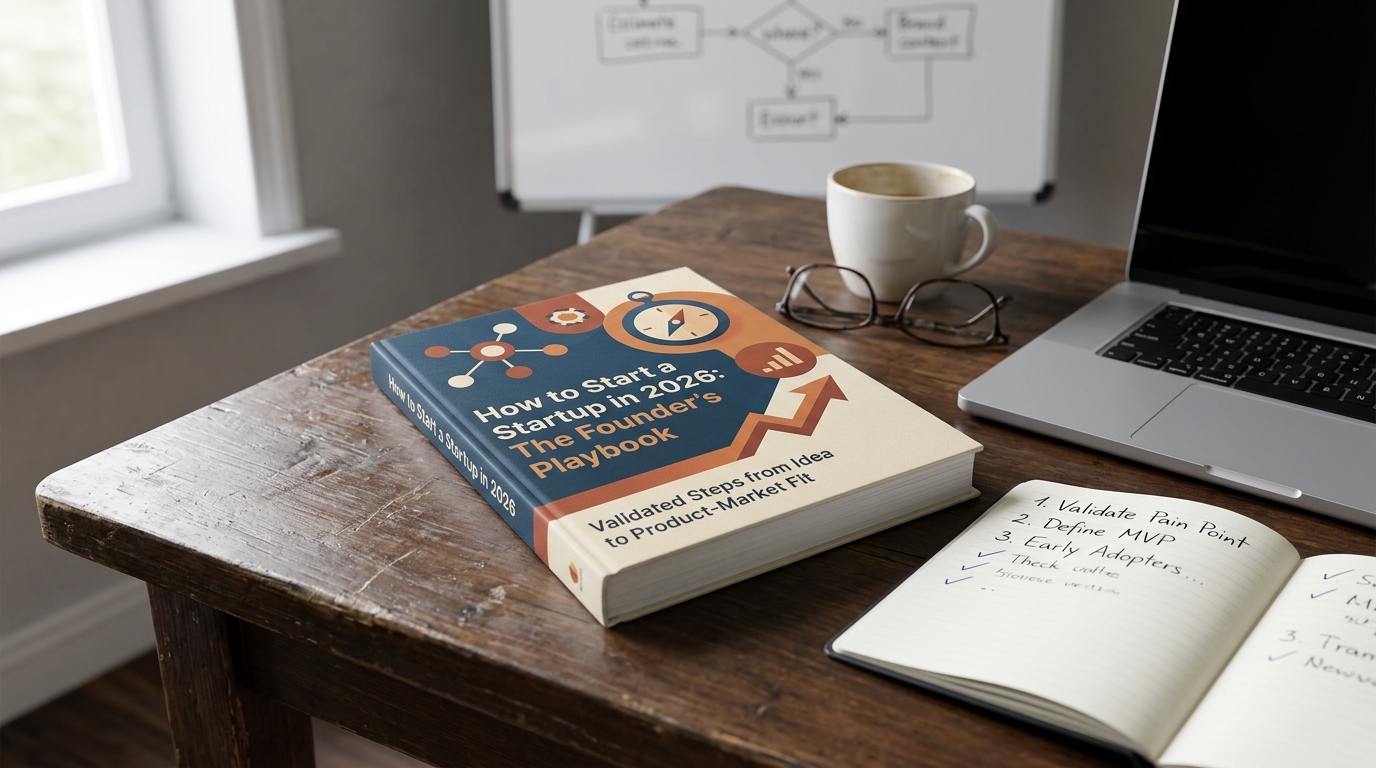
How to Start a Startup in 2026: The Founder's Playbook
If you want to start a startup, the short answer is a sequence: find a problem people already pay to solve, describe exactly who has it, test whether they’ll pay you, build the smallest product that fixes it, and launch to a small group. Then repeat until customers start coming back on their own. Each step reduces the risk of the next one, and skipping steps is the most common reason new companies stall.
 Strategy
September 22, 2026·6 min
Sales Strategy for Startups: From 0 to First 100 Customers
A working sales strategy for startups at the zero-to-100 stage has three traits. The founder does the selling, the target group is narrow, and every conversation is used to learn something about the buyer. Scale comes later. Your first deals come from talking to people one by one and adjusting the pitch after each call.
 Strategy
September 21, 2026·6 min
Startup Business Plan: What Investors Actually Want to See
A startup business plan for investors is a short document, usually two or three pages, that answers four questions: what problem you solve, who pays for the fix, how the money comes in, and why your team can pull it off. Investors read it to see whether you think clearly and whether your claims hold up under a quick check. Most of them skim. If the answers aren’t easy to find in the first few minutes, the plan has already done its job badly.
 Strategy
September 15, 2026·6 min
Pre-Seed Funding: How It Works and How to Raise It
Pre-seed funding is the very first outside money a startup takes to turn a raw idea into early proof. You raise this money to build your first product version and show that people actually want it.
Founders often get confused at this stage. They hear pre-seed, seed, and angel investing thrown around and can’t tell what applies to them. A pre-seed round has its own rules, and knowing them early saves months.
 Strategy
September 14, 2026·6 min
How to Get Investors: A Pre-Seed Founder's Guide
Most founders start fundraising by writing to someone they found on LinkedIn the night before. That rarely goes anywhere. If you’re figuring out how to get investors at the earliest stage, most of the work happens before the first message: choosing the right people, reaching them through someone they trust, and showing up with enough proof to earn a second meeting.
 Strategy
September 8, 2026·6 min
Elevator Pitch: How to Nail Yours in 30 Seconds (+ Examples)
Picture it. You’re at a conference, the coffee line is moving slowly, and the person next to you turns out to be an investor you’ve wanted to meet for months. They ask the obvious question: so, what do you do? You have about half a minute before their attention moves on.
 Strategy
September 7, 2026·6 min
Revenue Model: Types, Examples, and How to Pick One
Sooner or later, every founder hears the same question from an investor: how does this make money? Not whether people like the product, but how their interest turns into income. Your revenue model answers that question.
 Strategy
September 2, 2026·6 min
Pricing Strategy for Startups: How to Set Prices That Sell
Setting the first price for a new product is harder than it looks. The price is too high and you worry about scaring people away. Prices are too low and you leave money on the table that a young company badly needs. Most founders end up picking a number that feels safe, then never revisit it.
 Strategy
September 1, 2026·6 min
What Is Product-Market Fit? The Complete Founder's Guide
Most founders can tell you the moment things changed. Before it, every customer had to be chased, convinced, and reminded. After it, people started showing up on their own, and some of them brought friends. That shift is what everyone means by product-market fit.
 Strategy
August 25, 2026·6 min
Go-to-Market Strategy Template: Launch Your Startup From Zero
The product works, the bugs have been fixed, and your first friendly testers have showered you with compliments. You launch sales… and hit a brick wall. Building a great product is only half the battle. The other half is figuring out how to showcase it to the people who have the money.
 Strategy
August 24, 2026·6 min
Burn Rate and Runway: How Long Will Your Money Last?
“How many sign-ups do you have right now?” - the founder will rattle off the number instantly. “How many months will the money in your account last?” - the founder will hesitate and start guessing. And it’s precisely that guess that’s the reason he’ll wake up drenched in sweat at four in the morning.
 Strategy
August 19, 2026·6 min
Founder-Market Fit: Why It Matters Before Product-Market Fit
Investors almost never ask this out loud, but they answer it in their heads throughout the meeting: Why is this person the right one to solve this problem? The deck can be clean, and the numbers can be reasonable, and that quiet question still decides how the conversation ends.
 Strategy
August 18, 2026·6 min
Beachhead Market: How to Pick Your First Segment
Most founders try to serve everyone at once, and it quietly kills the launch. The pitch deck says “any small business,” the landing page tries to speak to five audiences, and nobody feels like the product was built for them. A beachhead market is the fix: the small, specific first segment you dominate completely before you expand anywhere else.
 Strategy
August 17, 2026·6 min
MVP Development: What to Build First (and What to Skip)
Most founders don’t fail because their idea was bad. They can fail because they spent eight months building version one, ran out of money three weeks after launch, and never learned whether anyone wanted it. Bad MVP development looks exactly like that: you pour your runway into a bloated first release, polish features nobody asked for, and by launch there’s no budget left to fix what’s wrong.
 Strategy
August 12, 2026·6 min
How to Validate a Business Idea Before You Build
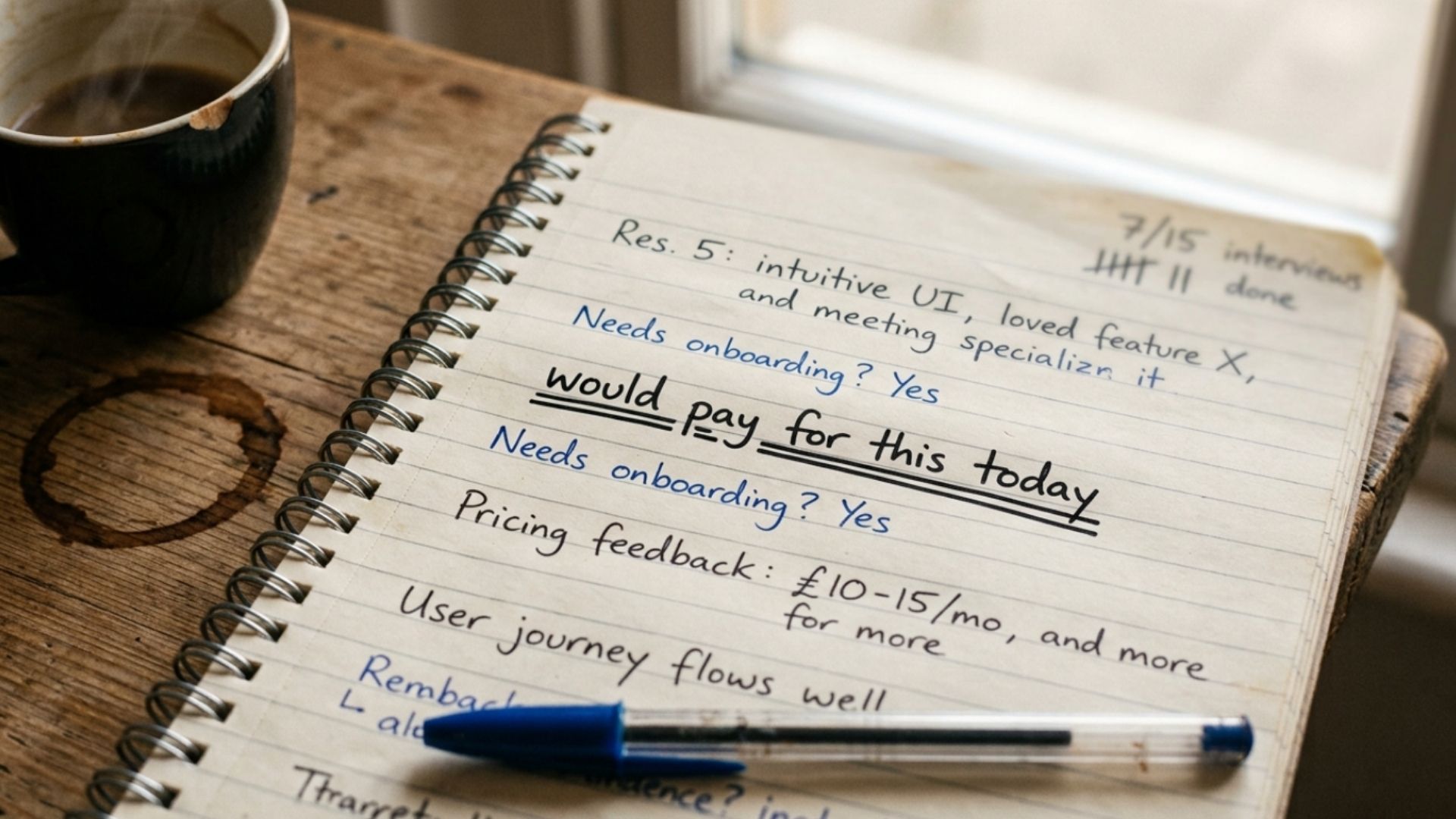
Months of building, then a launch that gets met with silence. Nobody signs up, nobody replies, and all that’s left is a long list of features nobody asked for. It’s one of the most expensive mistakes a founder can make, and it’s almost always avoidable. Learning how to validate a business idea before writing a single line of code is what separates a wasted quarter from a real head start.
 Strategy
August 11, 2026·6 min
Positioning Statement: How to Write One That Actually Works
A founder gets asked who they’re for and why they’re different, and the answer comes out as three separate sentences that don’t quite agree with each other. It’s one of the clearest signs something’s missing underneath the pitch, and it’s more common than most people expect at this stage.
 Strategy
August 10, 2026·6 min
Jobs To Be Done: The Framework for What Customers Actually Want
A team spends months building a feature customers never actually asked for, because nobody understood what those customers were really trying to accomplish in the first place. It’s one of the most common ways good teams waste good effort.
 Strategy
August 5, 2026·6 min
TAM SAM SOM: How to Size Your Startup Market (With Examples)
An investor asks how big the market actually is, and a vague answer kills the momentum you’d been building for the last ten minutes. It happens in almost every pitch meeting, and it’s one of the fastest ways a conversation goes cold.
 Strategy
August 4, 2026·6 min
Problem Statement: How Founders Define the Right Problem
Founders fall in love with a solution before they can clearly say what problem it actually solves. It happens constantly. Someone gets excited about an idea, starts building, and only months later realizes nobody can explain in one sentence what pain the product actually fixes.
 Strategy
July 30, 2026·7 min
Startup Coaching vs. Mentorship: Which One Do You Actually Need?
A business mentor and a startup coach are not the same thing, and picking the wrong one costs you months. Here is how they differ in structure, cost, and outcomes — and how to tell which one your company needs right now.
 Strategy
July 27, 2026·6 min
SaaS Pricing Strategy: How Early-Stage Startups Should Set Their First Price
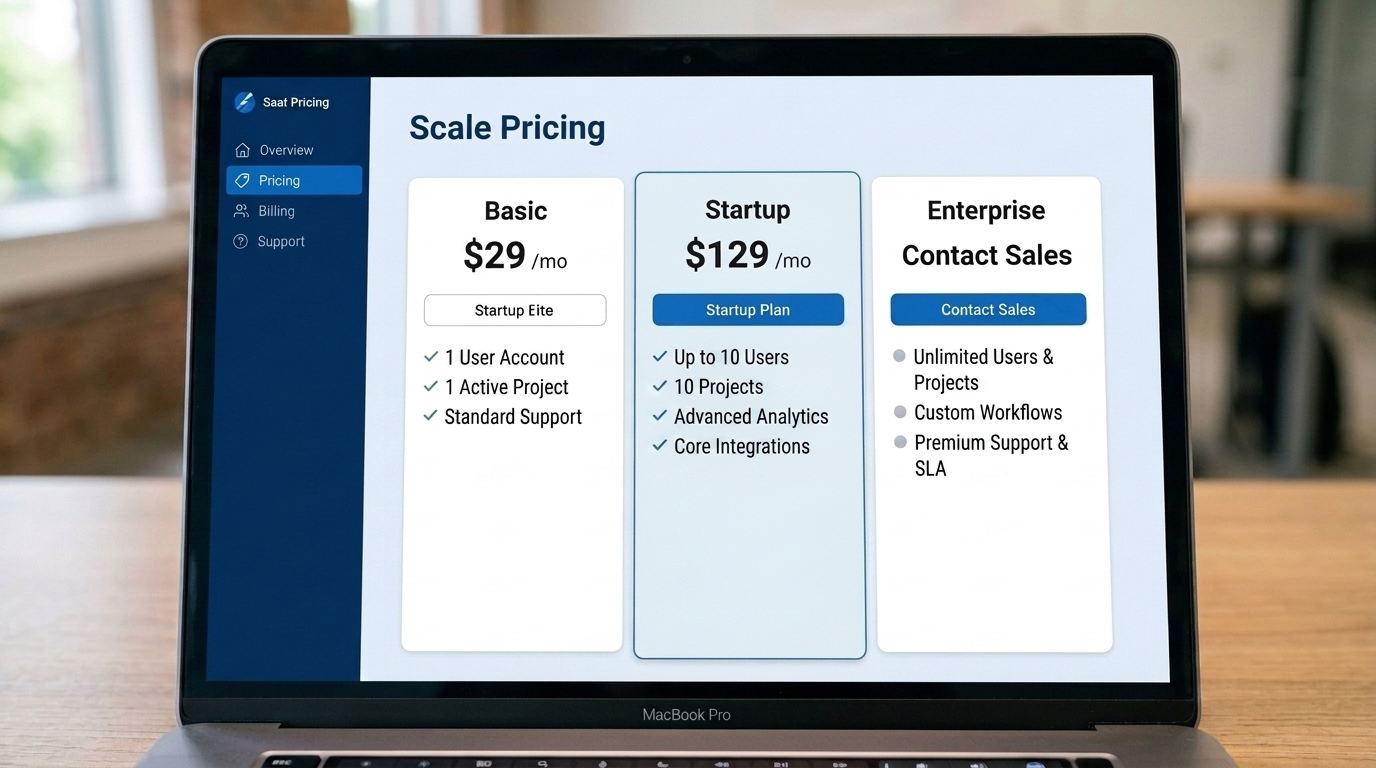
A good SaaS pricing strategy starts from the concrete value you create for a specific customer, not from a random cost-plus guess or whatever a competitor happens to charge. Your first price should reflect the actual outcome your software delivers, not the cost of your servers. Still, there's hardly a more nerve-wracking moment for a founder than typing a final number onto a pricing page. The pric
 Strategy
July 21, 2026·6 min
AI Tools for Startup Founders: What to Actually Use at Pre-Seed
At the pre-seed stage, you need a tiny, focused stack that helps you think, research, write, and reach people. Most of it can be completely free. You don't need an enterprise software budget to get your product off the ground. Open any social feed, and the noise problem is obvious immediately. New AI tools for startups launch every month by the thousand, and a pre-seed founder genuinely doesn't ha
 Strategy
July 20, 2026·6 min
Customer Discovery: How to Interview Users Before You Build Anything
Customer discovery is the practice of interviewing real, potential users about their actual problems before you write a single line of code. It's how you make sure you're building something people genuinely want, instead of something you just hope they'll want once it exists. Think of it as your safety net. Every year, thousands of founders make the same expensive mistake. They disappear into a ro
 Strategy
July 16, 2026·6 min
Pre-Seed Pitch Deck: The 10 Slides Investors Actually Read
A pre-seed pitch deck relies on about 10 core slides to sell a real problem, a sharp insight, and a founding team worth betting on. Investors move through these 10 slides fast, mostly to see whether you can actually execute, not to dig into financial metrics you don't have yet and honestly aren't expected to.
 Strategy
July 15, 2026·6 min
OKRs for Startups: How to Turn Strategy Into a Weekly Cadence
OKRs for startups take a big-picture strategy and turn it into a handful of measurable goals plus a weekly rhythm that keeps a small team pointed in the same direction. They fix a failure most founders know too well. You write a genuinely good strategy, then watch it gather dust in a doc while the team spends the quarter firefighting whatever came up that morning.
 Strategy
July 14, 2026·6 min
Accelerator vs. Incubator vs AI Accelerator: Which One Does Your Startup Actually Need?
To choose between these programs, you really just need to look at where your startup stands right now and how fast you want to grow. Accelerators trade equity for a short, intense sprint toward funding. Incubators offer slower, longer-term support with no clock running. And a newer AI accelerator model promises always-on guidance without the high cost of either one.
 Strategy
July 7, 2026·7 min
AI Business Strategy: Tools, Framework & Practical Examples
Choose AI tools by the decision you need to make. A practical framework, tool comparison and worked example for founders, with clear checks for evidence and results.
 Strategy
July 6, 2026·6 min
Online Business Coach: Human vs AI - Which Is Right for You?
Founders used to have one real option when they wanted outside guidance: find an online business coach, get on a call, and hope the advice was worth the invoice. For a long time, that meant hiring a virtual business coach and building your whole strategy around a weekly session. That’s changed. Now there’s a second option sitting right next to it, and it’s growing fast. AI coaching tools promise the same kind of guidance for a fraction of the price, available at any time, with no scheduling and no small talk.
 Strategy
June 3, 2026·6 min
Is a Business Coach Worth It? ROI Analysis for Founders in 2026
Every founder eventually faces the question, and it usually arrives at an uncomfortable moment. When the business is stuck, when a key decision feels impossible, or when the runway is shorter than it should be, is a business coach worth it?
 Strategy
June 1, 2026·6 min
Do You Need a Business Coach in 2026? Signs, Benefits, and How to Find the Right One
There’s a moment most founders recognize, even if they don’t talk about it openly. The business is moving, but something feels stuck. Decisions take longer than they should. The same problems keep resurfacing. Growth that felt inevitable six months ago now feels uncertain. And in the background, a question starts to form: Do I need a business coach?
 Strategy
May 27, 2026·6 min
How Much Does a Business Coach Cost in 2026? A Real Breakdown of Pricing, Value, and What You’re Actually Paying For
At some point in almost every founder’s journey, growth stalls. The decisions that used to feel clear are starting to feel vague. The team needs more direction. Revenue has plateaued, and you can’t quite diagnose why. This is usually when the question surfaces: Should I hire a business coach?
 Strategy
May 25, 2026·6 min
Startup Strategy: Why Doing Everything Is Killing Your Startup (And What to Do Instead)
There’s a specific kind of exhaustion that hits founders around month three or four. You’re working twelve-hour days, posting on LinkedIn, tweaking the product, rewriting the pitch, responding to every intro, attending every networking event. You’re busy in a way that feels productive - and yet nothing is actually moving.
 Strategy
May 18, 2026·6 min
Pre-Seed Startup Guide: Everything You Need to Do Before You Ask Anyone for Money
Most founders approach fundraising backward. They have an idea, maybe a landing page, sometimes a pitch deck - and they start sending cold messages to investors before they’ve answered a single hard question about their business. The calls happen, but rejections also follow. And the founder spends three months confused about why nobody is interested.
 Strategy
May 11, 2026·6 min
Startup Financial Model: How to Build Projections That Investors Actually Believe (Free Template Inside)
Most founders build their first startup financial model the same way. An investor asks for projections, and the founder opens a blank Excel sheet. These types, in numbers, feel roughly reasonable, and send it off, hoping nobody asks too many follow-up questions.
 Strategy
May 8, 2026·6 min
5 Product-Market Fit Frameworks Every Founder Should Know
Product-market fit is the moment when that question gets answered. It’s when a specific group of people genuinely needs what you built, uses it repeatedly, and would be noticeably worse off without it.
 Strategy
May 7, 2026·6 min
Positioning Strategy for Startups: How to Own a Space in Your Customer’s Mind Before Competitors Do
Positioning strategy is the deliberate decision about what your product is, who it’s specifically for, and why it’s different from every other option your customer could choose. Compressed into a message someone can understand in five seconds. For a startup without a $10M ad budget to hammer home awareness through repetition, that message has to do the heavy lifting on its own - pulling in the right people and signaling clearly to the wrong ones that this isn’t for them.
StrategyMay 6, 2026·6 min
Startup Roadmap: The 12-Month Journey Most Founders Take (And How to Do It in 90 Days)
Most founders start the same way: an idea, energy, and a strong urge to start building immediately. So they build. But three months later, they have a product nobody asked for, messaging that doesn’t land, and a vague sense that something went wrong - but they’re not sure what.
 Strategy
May 4, 2026·6 min
Messaging Framework for Startups: 7 Steps to a Story That Makes Customers Say “That’s Exactly What I Need”
You’ve spent months building something that genuinely works. You know it solves a real problem. Your team knows it. And yet every time you try to explain it to someone outside the building, you get the same polite nod followed by silence. They say “interesting” and disappear. It’s a messaging framework problem.
 Strategy
May 1, 2026·6 min
Go-to-Market Strategy: Step-by-Step Guide for Startup Founders
Most startups don’t fail because the product is bad. They fail because they launch into a vacuum - six months of building, a quiet “publish,” and then the slow realization that nobody is coming. Just a product sitting in the open with no path to the people who need it.
 Strategy
May 5, 2026·6 min
How to Build an Ideal Customer Profile (ICP) for Your Startup
There’s a specific pattern that shows up in struggling startups with uncomfortable regularity. The founder is running demos, following up on leads, watching the signup numbers inch upward - and yet half those leads go quiet after the first call, and the ones who do convert churn within sixty days. The instinct is to blame the product or the pitch. Almost always, the real problem is simpler and more fixable: you’re talking to the wrong people.